Mattress Type 101: A Practical Guide to Foams, Innersprings, and Hybrids
In a world where sleep is a nightly investment in health, choosing the right mattress type can feel like picking the perfect partner for a lifetime. This guide dives into the core mattress categories—foams, innersprings, and hybrids—breaking down how each type works, what kind of comfort it tends to deliver, and which sleep personalities they suit best. We’ll connect centuries of sleep wisdom with contemporary engineering, offering a clear, practical path to a better night’s rest.
Three Mattress Families: Foams, Innersprings, and Hybrids
Foam mattresses are built from layers of foam that vary in density, cell structure, and resilience. The most well-known subtype is memory foam, which responds to heat and pressure to contour to your body. Memory foam can offer exceptional pressure relief for curves and joints, making it a favorite among side sleepers and people seeking a plush, cradling feel. Other foam compositions, including high-density polyfoam and plant-based foams, emphasize durability, temperature behavior, and eco-friendly narratives.
The strongest selling points of foam mattresses are their ability to isolate motion, reduce transfer between sleepers, and provide consistent contouring that can help with alignment in various positions. Temperature management for foam has evolved, with open-cell structures, gel infusions, and breathable covers helping to address the common critique of heat retention. If you tend to sleep hot, you’ll likely want to explore foams engineered for cooling, or consider layering a breathable foundation with breathable cover materials.
Why this matters for comfort and durability
- Conforming support that helps with pressure relief for hips and shoulders.
- Potential heat retention that cooling foams and fabrics aim to mitigate.
- Durability varies by density and construction; higher density generally translates to longer life.
Innerspring
Innerspring Mattresses
Innerspring mattresses rely on metal coil systems for support and a comfort layer that can range from pillow-toppy to more compact. Classic coil systems offer robust edge support and a lively, responsive feel—great for people who appreciate bounce and a more traditional sleep surface. Modern variants feature pocketed coils that minimize motion transfer and allow targeted contouring, particularly when paired with foam or latex comfort layers.
The durability of innersprings is often tied to coil counts, coil gauge, and the quality of the padding and ticking. Proper edge construction keeps the sleep surface uniform from edge to edge, which matters if you share the bed or sit on the edge to get in and out. Temperature is influenced by the core design and the materials used in the comfort layers; breathable fabrics and natural fibers can help with airflow around the coils.
Why this matters for comfort and durability
- Great bounce and strong support, especially for combination sleepers.
- Edge support is often excellent in well-made models, improving usable sleep surface.
- Durability hinges on coil quality and the surrounding comfort layers; some users may experience more motion transfer with some coil constructions.
Hybrids fuse the best of foam (or latex) and springs, delivering a balanced feel that combines contour and responsiveness. The idea is to offer the contouring benefits of foam with the bounce and cooling potential of an innerspring core. Hybrids can feature a supportive coil system with multiple foam or latex comfort layers, including cooling foams or natural materials intended to regulate temperature and moisture.
For sleepers who aren’t sure which direction to go, hybrids can be a practical middle ground—offering body-hugging comfort in the top layers while maintaining strong support and air movement through the coil base. Edge support and zoning can play a key role in how a hybrid sleeps for different body shapes and sleeping styles.
Why this matters for comfort and durability
- Often a strong all-around choice for couples and diverse sleep positions.
- Cooling and airflow can be excellent when coils are paired with breathable foams or latex.
- Durability is typically robust, as hybrids leverage dual-system construction; however, the life of the top foam or latex layer matters as much as the coil system.
What to Buy? A Practical Checklist
Buying guardrails you’ll actually use
When you’re standing in a showroom or browsing online, it’s easy to be seduced by a single feel—soft, medium, or firm. But the best mattress decision is anchored to a simple framework: alignment, contour, temperature, edge-to-edge stability, and durability. Use this quick checklist as you compare options:
- Sleeping position: Side sleepers tend to seek more contouring, back sleepers want balanced support, and stomach sleepers often need firmness to prevent sagging.
- Body weight and distribution: Heavier individuals interact differently with foam versus coil systems. A denser foam or thicker coil gauge may be advantageous.
- Temperature management: Look for breathable covers, open-cell foams, latex, or hybrids with cooling features to mitigate heat buildup.
- Motion isolation: Couples or restless sleepers will benefit from materials that minimize motion transfer.
- Edge support: If you frequently sit on the edge or slip off during the night, strong edge reinforcement matters.
- Durability and warranty: A longer warranty and solid build quality are often markers of a mattress that will stand the test of time.
Materials Spotlight
Understanding the materials that shape your sleep
The modern mattress market is a tapestry of materials: memory foams, gel foams, latex (natural or synthetic blends), polyfoams, and a spectrum of coil technologies. Each material comes with a distinct signature:
- Memory foam: contouring, pressure relief, and motion isolation but with potential heat retention unless engineered for cooling.
- Latex: buoyant, responsive, and often cooler than memory foam; natural latex adds a layer of eco-credibility for many buyers.
- Polyfoam: versatile, affordable, and often used in the comfort layers for a smoother transition of pressure; density varies widely.
- Innerspring cores: steel coils provide support, with pocketed designs reducing motion transfer and enabling contouring when layered with foams or latex.
- Hybrid construction: a thoughtful blend of contouring materials above a spring core to balance pressure relief with bounce and airflow.
Temperature management is a recurring theme across materials. A breathable cover, a coil core that encourages air movement, and the use of open-cell foams or latex all contribute to a cooler night. If temperature is a top priority, your test plan should emphasize how you feel after an hour of lying still on a model in your typical sleeping position.
Match Your Mattress to Your Sleep Persona: Position, Weight, and Perception
Side sleepers: The contour lovers
If you cradle your shoulder into the mattress during the night, you’ll likely prefer foam or latex that can wrap around critical pressure points without creating a sense of being hugged too tightly. The best options often feature softer top layers or softer zones in the shoulder region, but with adequate support beneath to keep your spine aligned. Hybrids can be a sweet spot, offering contour from the foam or latex top while the coils give you sturdy support at the torso.
Practical tip: test pressure relief across the entire shoulder-hip area. A mattress that provides even contouring without creating a dip at the shoulder tends to feel more comfortable over the long haul.
Back sleepers: The balanced voyagers
A stable, balanced feel is ideal for back sleepers. Look for a medium-firm profile with good lumbar support, ensuring the spine remains in a neutral position. Foam layers with a little more firmness toward the midsection or a hybrid’s medium core can be ideal. Innerspring cores with a robust edge support can help extend the sleeping surface’s usable area, especially if you tend to roll toward the edge at night.
Pro tip: pay attention to how your hips settle; if they sink too deeply, you may prefer a firmer top layer or a slightly denser foam base to maintain spinal alignment.
Stomach sleepers: The firm anchor
For stomach sleepers, a firmer surface helps prevent the midsection from sagging into the mattress and pulling the spine out of alignment. Foam and hybrid designs with a firmer feel in the center can be a better fit. Be mindful of too-firm surfaces that create painful pressure on the hips; a balanced approach with a slightly firmer middle and softer edges can promote comfort without sacrificing support.
Weight considerations: Heavier and lighter bodies
Weight distribution affects how quickly a mattress compresses and how it supports joints. Heavier individuals may benefit from higher-density foams or coil systems with more robust support, while lighter people might enjoy softer foams or latex layers that still deliver essential support without excessive compression. In hybrids, the coil gauge and the density of the comfort layers combine to define the feel. A mattress that accommodates changes in your body over time offers better long-term comfort.
Three Voices Across Time: How Sleepers of Different Eras Might Choose
In the ancient world, a good night’s sleep was intertwined with ritual and rest itself. If Hypnos could audit a modern mattress, he’d likely appreciate a surface that promotes calm, undisturbed sleep and easy return to the waking world. A surface with natural materials—perhaps a mattress that blends breathable fibers and pure foams that do not trap heat—would align with mythic ideas of restful repose after a long day of weaving dreams. The emphasis would be on steady, uninterrupted sleep that’s free from constant tossing and turning, a dream-state he would likely applaud as “sound as the river Styx.”
Queen Victoria (Victorian Era)
Queen Victoria’s era valued layering and sumptuous comfort. Think feather beds, heavy textiles, and a sense that sleep is a royal ritual. If she shopped today, she might favor a hybrid—an elegant balance of support and plushness that still offers practical durability for a busy life. The idea of multiple layers—top comfort layers, a sturdy core, and a cover that breathes—would feel familiar to a monarch who prized both spectacle and function.
In the modern era of rapid innovation and sleep science, a practical thinker like Elon Musk would likely gravitate toward a surface that merges technology and comfort. A high-performance hybrid with cooling foams, moisture-wicking cover materials, and durability to withstand night after night of demanding schedules might align with his pragmatic approach. He’d also appreciate transparency around materials and sustainability—clear data that supports a healthier sleep for peak performance at work and life.
Product Spotlight: A Nothing-Left-To-Guess Pick
Product Spotlight
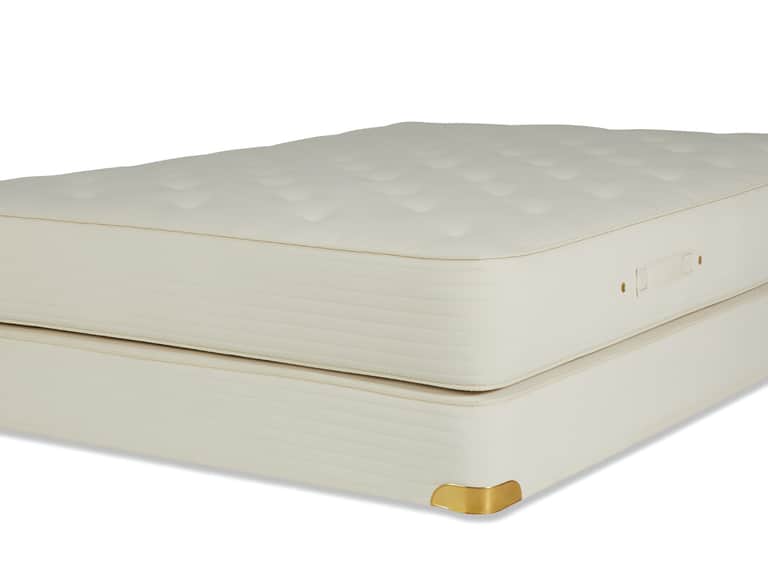
Royal-Pedic Natural Collection Cotton Mattress (Dr.'s note required)
In a world where craftsmanship meets clinical caution, this Royal-Pedic Natural Cotton Mattress stands out as a rarefied option for sleepers who want an orthopedic, all-natural cotton core without wool for flame protection. The mattress is the result of decades of European-inspired engineering, built around a Swiss-designed innerspring system that emphasizes torso support and long-lasting resilience. It is marketed as “Orthopedic Firm” and invites buyers to layer in latex toppers if they desire additional pressure relief.
From a People-style perspective, what makes this pick interesting is not only its premium materials but the story behind the brand—Royal-Pedic’s long history and the meticulous approach to longevity. It’s the kind of mattress you might imagine a high-profile executive placing at the foot of a mahogany bed in a show-stopping, timeless bedroom. The doctor’s note requirement signals a particular fidelity to chemical safety and a preference for non-wool fire protection, which aligns with a clinical trust in a sleep surface.
- Brand: Royal-Pedic
- Line: Natural Cotton Collection
- Core: Pure long-staple cotton outer cover with a Swiss inner spring design
- Firmness: Orthopedic Firm
- Size options: Standard bed configurations (customization often available via inquiry)
- Warranty/Service: Custom-order pathways, with support for sizing and foundation options
Price: $6,126.00. This reflects the premium materials and the bespoke nature of the product, which stories love to tell—handcrafted seams, durable coil patterns, and a surface designed to keep alignment in check for many years.
Note: This product’s imagery and detailed visuals are not included here, but the specification offers a vivid sense of what makes this bed a standout for connoisseurs of durable, high-quality sleep surfaces.
A Bedding Structure That Supports Your Whole Life
The Bedding Category as a Whole
The bed is more than a place to lie down; it is a nightly stage for recovery, mood, and daily resilience. The bedding category you see online is a reflection of an industry that continues to blend tradition with innovation. From organic and natural materials to advanced sleep science, the field acknowledges that a sound sleep is not a luxury but a foundation. The content here draws from a broader catalog that includes organic cotton, wool, latex, and durable, washable layers designed to keep mattresses clean and comfortable for years.
The “Structure” of a mattress—what sits on top of the core—matters as much as the core itself. The top layer must deliver the feel you crave, whether it’s the subtle pressure relief of memory foam, the buoyant bounce of latex, or the gentle contouring of a high-density foam. The base layer or coil system provides ongoing support and stabilization, shaping how the bed behaves through seasons of change.
What You’ll Find in Modern Mattresses
In modern offerings you’ll often encounter features designed for durability and comfort at scale: multilayer constructions with varied densities, zoned support to align spines, cooling technologies built into foams and covers, and lifetime warranties that reassure buyers about long-term value. Some brands emphasize pure organic materials—cotton, wool, latex—coalescing into products that claim lower chemical exposure and a more harmonious sleeping environment.
The practical takeaway is simple: investigate the core story of the mattress and the surface layer’s philosophy. A well-made hybrid can deliver a balanced, versatile feel that’s attractive to couples with different preferences. A foam mattress can be a cozy, quiet option for light sleepers who want to minimize motion transfer. An innerspring mattress can offer tradition, edge support, and a reliable baseline for those who love a breathable feel.
Conclusion: Your Night, Your Narrative
The choice of a mattress type is not simply a mechanical decision; it’s a personal story about comfort, health, and daily vitality. The three core families—foams, innersprings, and hybrids—each offer a path toward better sleep, and your selection should align with your body, your sleep schedule, and your life rhythm. In a world of ever-evolving fabrics and fantastic-sounding features, the most enduring truth remains: the right surface helps you wake up restored, ready to greet a new day with energy and ease.
For those who want a practical, luxury-minded anchor, a mattress like the Royal-Pedic Natural Cotton Collection offers a heritage-rich option for those who value enduring craftsmanship and classic support. If you’re drawn to the idea of a sleep surface that honors modern science while maintaining a sense of timeless luxury, hybrids might be the sweet spot. And if you are curious about a surface that embraces natural materials and a philosophy of sustainable comfort, a foam-to-latex blend could be the perfect middle ground.
A Note on Keywords and Sleep Health
Understanding mattress types feeds into broader sleep-health goals. When people search for mattress guidance, they want clarity about feel, durability, cooling, and the longevity of a product. The keyword themes nested in mattress discussions—foam mattresses, innerspring mattresses, hybrid mattresses, sleep comfort, durability, and cooling—signal a desire for practical, decisive information that helps people pick a surface they can grow with. This is the heart of Mattress Type 101: a pragmatic guide to the core materials, the way they perform, and the real-world considerations that affect nightly rest.