Organic Mattresses · Buying Guide
How to Assess Firmness in Organic Sleep Surfaces
“Firm” sounds like a simple promise. On a mattress, it is anything but. The sensation depends on the materials beneath the cover, the way the layers are assembled, and the body resting on them. A useful assessment starts not with a label, but with a question: does the surface keep you comfortably supported without creating pressure or forcing you into an awkward position?
Published October 10, 2026
Firmness is often the first feature people compare when they shop for an organic mattress. It is also one of the easiest to misunderstand. The word may suggest a measurable standard, as if a “firm” rating from one maker could be placed beside the same rating from another and produce a clear verdict. In practice, firmness scales are not standardized across manufacturers. A firm mattress from one company may feel quite different from a firm mattress built by another.
That difference matters because a surface is not experienced in isolation. The same mattress can feel welcoming to one sleeper and unyielding to another. Body weight, sleeping position, proportions, movement during the night, and personal comfort all shape the impression. So do construction details: a quilted wool wrap, a cotton comfort layer, a latex component, or a tightly tensioned innerspring system can change how the top of a mattress responds.
Organic materials add another layer to the evaluation, but they do not automatically determine firmness. “Organic” describes aspects of material sourcing or certification; it is not a comfort grade. A thoughtful comparison considers the complete sleep surface, including how it supports the body, where it yields, and whether its materials and construction suit the sleeper’s needs.
Firmness and support are related, not interchangeable
Firmness describes the sensation of the upper surface: how hard or soft it feels when someone lies down. Support describes how effectively the mattress holds the body in a reasonably comfortable, stable position. The terms are frequently treated as synonyms, but they answer different questions.
A mattress may feel firm at first contact yet still allow a sleeper’s hips to sink more than the shoulders. Another may feel gently cushioned at the surface while its underlying structure provides stable support. A useful way to think about the distinction is that firmness is a perception, while support is a performance question. Neither can be inferred reliably from the label alone.
Support is not a medical treatment, and a mattress cannot promise to prevent or cure pain. Still, the way a surface distributes pressure and accommodates a person’s shape can affect comfort. If you wake with persistent pain, numbness, or other symptoms, consider seeking advice from a qualified health professional rather than treating mattress selection as a substitute for care.
When testing a mattress, notice more than whether it seems hard. Ask whether your body settles evenly, whether you feel pressure at the shoulder or hip, and whether you can relax without bracing against the surface. The right answer is not necessarily “as firm as possible.” It is a balanced sensation that feels supportive to you.
Why firmness labels cannot settle the question
Some mattress makers use numbered scales, while others rely on terms such as plush, medium, cushion firm, or orthopedic firm. Even when two brands use the same vocabulary, they may define it differently. A rating is best treated as a clue about a company’s own range, not as a universal measurement.
The structure beneath the cover helps explain why. A mattress with a spring core and a relatively thin comfort layer will respond differently from one with a substantial latex layer or a thick quilted wrap. Even two mattresses made from similar materials may differ in the density, thickness, tension, and arrangement of their components. Surface quilting and upholstery can also influence the first impression, before the deeper support layers come into play.
Materials have characteristic behaviors, but no material has a single inevitable firmness. Latex can be made in different densities and configurations. Cotton batting may compress and settle with use. Wool is often used as a comfort or insulating layer, but its feel depends on how much is used and how it is arranged. Innerspring systems vary in design and tension. “Natural,” “organic,” and “chemical-free” are not substitutes for a clear description of the mattress’s construction.
For this reason, the best firm organic mattress for one person may not be the best choice for another. A product description can help identify materials and intended feel, but it cannot fully predict how the surface will respond to an individual body. When possible, use an in-person trial, a clearly stated return policy, or a reliable comfort exchange process to reduce uncertainty.
Start with your sleeping position
Sleeping position influences where a mattress meets the body and where pressure may concentrate. It is not a rigid formula for choosing firmness; people change positions, and bodies differ. But it is a useful starting point when comparing options.
- Side sleepers often meet the mattress most directly at the shoulders and hips. If the surface is too unyielding for their shape, those areas may feel compressed. The goal is not maximum softness, but enough accommodation to reduce concentrated pressure while maintaining a stable overall feel.
- Back sleepers may focus on whether the surface feels balanced beneath the torso and pelvis. A mattress that feels excessively rigid can seem uncomfortable; one that allows too much sinking may also feel unstable. Personal proportions and comfort determine where the balance lies.
- Stomach sleepers may prefer a more supportive sensation that limits excessive sinking through the middle of the body. That preference does not mean every stomach sleeper needs the firmest model available; it means the surface should feel steady and comfortable in the position they use.
- Combination sleepers should pay attention to ease of movement as well as static comfort. A surface that feels pleasant while lying still may be less suitable if changing positions feels effortful or disruptive.
These are practical observations, not clinical rules. A person who sleeps on their side may prefer a firm mattress, and a back sleeper may prefer a softer surface. What matters is how the mattress feels over a meaningful trial, not whether a general description appears to dictate a single answer.
Body weight and shape change the experience
Two people can lie on the same mattress and experience different firmness because the mattress responds to the force and distribution of their weight. A lighter sleeper may engage less deeply with the comfort layers and perceive a surface as firmer. A heavier sleeper may compress those layers farther and experience more contouring—or may reach a firmer underlying layer sooner, depending on the design.
Weight alone does not describe the whole picture. Height, shoulder width, hip shape, and the distribution of body mass all affect contact with the mattress. Couples may also notice differences between their experiences on the same bed, particularly when they have different body types or preferred sleep positions. Their shared decision may need to account for both comfort and movement across the surface.
Rather than searching for a universal firmness recommendation based on a number, consider how your body feels after settling into your usual sleep position. Do your shoulders and hips feel pressed? Does your lower back feel unsupported? Are you comfortable staying there, or do you repeatedly shift to escape discomfort? These observations are more useful than a label by itself, though no brief test can guarantee long-term satisfaction.
Read the construction, not just the adjective
When comparing organic mattresses, look for a clear account of what is inside and how the layers work together. Ask whether the mattress uses an innerspring core, latex, cotton, wool, or a combination; how thick the comfort layers are; and whether the description identifies the materials and their roles. Construction details provide context for a firmness claim.
Consider, for example, a traditional innerspring mattress with a wool wrap. The springs contribute much of the underlying response, while the wool adds a layer of cushioning and changes the feel at the surface. The amount of wool, the spring design, and the way the layers are secured all matter. A description that calls a model “orthopedic firm” may communicate the maker’s intended feel, but it does not establish that the mattress is appropriate for every sleeper or provide a medical endorsement.
Organic certification and firmness are separate questions. A certification may address specified standards for materials or manufacturing, depending on the certification and product. It does not tell you whether a mattress will feel soft, firm, or comfortable for your body. Check the scope of any certification claim and distinguish it from comfort language.
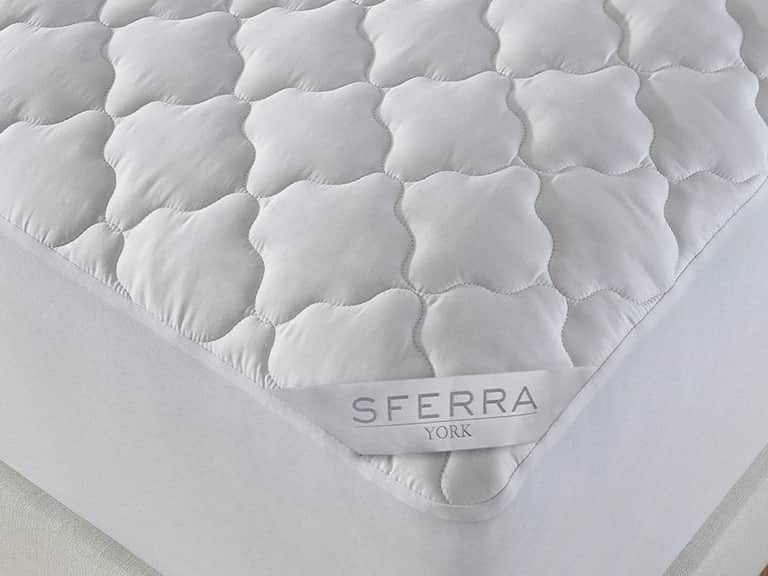
It is also worth distinguishing an organic mattress from organic bedding placed on top of it. A mattress pad can add loft or cushioning and therefore alter the surface sensation. A protector is generally intended to shield the mattress, though its fabric and construction can still affect the feel. If you are evaluating firmness, test the mattress with the same type of pad, protector, and sheets you expect to use at home.
A practical way to test a mattress
A quick sit on the edge or a few seconds on your back is not enough to judge a sleep surface. If you can test a mattress in person, give yourself time to settle into your normal position. Try each position you regularly use, and pay attention to comfort after the first impression has passed.
- Use your usual posture. Lie down as you would at home rather than holding an unnatural pose for the sake of the test.
- Check pressure and ease. Notice whether the shoulders, hips, or other contact points feel uncomfortably pressed, and whether it is easy to relax.
- Assess stability. Consider whether the mattress feels steady as you move, and whether your body seems to settle into a comfortable position.
- Test more than one position. If you change positions during the night, a mattress should be considered from more than one angle.
- Review the trial terms. A mattress may feel different after extended use than it does in a showroom. Understand the return or exchange period, requirements, and any costs before making a decision.
At home, keep a brief comfort record during any trial period. Note your sleep position, how the surface felt at bedtime, whether you woke during the night, and how comfortable you felt on waking. One unusual night is not a verdict. Patterns over time are more informative, although they still cannot replace medical evaluation when symptoms persist.
Questions that make comparisons more useful
When product pages use broad claims, specific questions can bring the comparison back to practical details. Ask what “firm” means within that maker’s range and whether the rating describes the surface feel, the overall support, or both. Find out which materials make up the comfort layers and core, and whether the stated materials are certified under a named standard.
Also ask how the mattress may change with use. Some natural fillings compress and settle over time; this is not necessarily a defect, but it can affect the surface sensation. Review care instructions, the warranty, and the terms for rotation or other maintenance. If the mattress is adjustable, confirm compatibility with the base. For couples, look for information about motion transfer and whether each side can accommodate different preferences.
These questions are especially helpful when the phrase “best firm organic mattress” appears in a guide or search result. “Best” is not a universal category unless the criteria are made explicit. One person may prioritize a particular material, another may value a stable feel, and someone else may need a specific size or construction. A credible comparison explains its criteria instead of presenting a single firmness choice as right for everyone.
Firmness is not a shortcut to health claims
Mattress advertising sometimes connects firmness with posture, back comfort, or orthopedic support. Such language should be read carefully. A firmness label alone cannot establish a health outcome, and a product description is not a diagnosis. Comfort is individual, and discomfort can have causes unrelated to the mattress.
For a new mattress, prioritize a surface that feels comfortable and stable in your usual positions. If you are managing a diagnosed condition, recovering from an injury, or experiencing ongoing pain, discuss practical sleep-surface questions with a qualified clinician who understands your circumstances. A retailer or manufacturer can explain construction and policies; that is different from giving personal medical advice.
A simple decision framework
Choosing among firm organic mattresses becomes more manageable when the decision is broken into separate questions. First, identify the materials and construction you want to evaluate. Second, consider your body, sleeping positions, and comfort sensitivities. Third, test the feel under realistic conditions. Finally, verify that the trial, care, and warranty terms work for you.
- Material: What are the mattress’s main components, and what role does each layer play?
- Feel: Does the surface feel too hard, too yielding, or reasonably balanced when you lie in your usual position?
- Support: Can you relax without feeling that the mattress is forcing an uncomfortable posture?
- Fit: Does the mattress suit your body, sleep habits, and any partner’s needs?
- Evidence: Are the material and certification claims specific, and are comfort policies clearly explained?
The bottom line
Firmness is a starting point, not a verdict. Labels vary from maker to maker, and the same organic sleep surface can feel different depending on a sleeper’s weight, shape, position, and preferences. Materials matter, but the words “organic” and “firm” do not tell the whole story.
Look beyond the rating to the mattress’s construction and your own experience. A suitable surface should feel comfortably supportive without obvious pressure points or a sense that you must fight the bed to settle in. Compare specific materials, test in the positions you actually use, and take advantage of a clearly defined trial period where available. The most useful firmness assessment is not the one that produces the strongest adjective. It is the one that helps you make a considered choice based on how the complete sleep surface works for you.
Frequently asked questions
Are firmness ratings standardized?
No. Manufacturers may use different scales and definitions. Treat a rating as a description of that maker’s range, then compare construction and personal comfort.
Does an organic mattress have to be firm?
No. Organic describes certain material or production attributes, not a particular comfort level. Organic mattresses can be built with different materials and firmnesses.
Is the firmest mattress always the most supportive?
No. Firmness and support are related but distinct. A very hard surface may not feel comfortable or supportive for every person, while a more cushioning mattress can still offer stable support.
How long should I test a mattress?
Follow the maker’s trial terms and allow enough time to notice patterns rather than judging from a brief showroom visit or a single night. Trial length and conditions vary, so confirm the details before purchasing.